Editorial Picks
How to Choose a Stem Cell Clinic in Seoul — 2026 Guide
Seoul, at the front of a regenerative cycle, holds the conversation more quietly than its export marketing suggests. The city's better dermatology and orthopaedic suites turn their warm sconces on as the light slips sideways through Cheongdam, and the discussion moves from filler-and-finish to something more considered. Stem cell and exosome protocols arrived in this corridor as the considered alternative to volumising fashions: autologous mesenchymal infusions, exosome-carrier microneedling, polynucleotide regenerative serums, and the regulatory designations that distinguish a permitted clinic from a marketing claim. 自家再生 — one's own regeneration — is the phrase a Singapore patient used after her second sequence, half wistful, half disbelieving at the gradual register. The clinics worth reading on this device are those that hold Korea's Advanced Regenerative Medicine Center designation in their own name, or sit inside a partnership with a tertiary academic centre, or run a quietly long-tenured director who refuses to schedule the second session before reviewing the first. Nine Seoul clinics, read on temperament rather than tier; the order reflects an unhurried walk from Gangnam through Cheongdam, out into Hongdae and Myeongdong, nothing more.
What to look for in a Seoul stem cell clinic
A stem cell or exosome protocol — the kind that justifies the airfare — rests on three quiet considerations. The first is regulatory designation. Korea's Ministry of Health and Welfare maintains a register of Advanced Regenerative Medicine Centres (첨단재생의료센터), and a clinic that carries this status has demonstrated infrastructure, physician credentialling, and protocol governance to a standard the casual booster house has not met. One should ask, plainly, whether the designation is held in the practice's own name. The second is the supply chain. Autologous protocols draw from the patient's own marrow or adipose tissue; allogeneic exosome carriers must be sourced through regulated manufacturers, with batch lot numbers visible on the vial before reconstitution. A house that obscures provenance is signalling something about its standards. The third is the review cadence: regenerative effects are graduated, and a senior physician who schedules the patient back at week four and week eight, before committing to a second infusion, is one that values the outcome over the rhythm of repeat business. Korean medical law requires a licensed physician to administer the protocol, which raises the floor. What separates the clinics one returns to from those one merely visits is what sits above that floor: the consultation that takes forty-five minutes rather than ten; the coordinator who reads the case file before the patient arrives; the senior physician willing to defer the next session when the first has done the work.
The Beautiful Skin Clinic (Gangnam)
The Beautiful Skin Clinic (Gangnam) is a Gangnam aesthetic dermatology practice with a curated booster and lifting menu. Senior physician oversight on each protocol, written four-week review, and an English-speaking coordinator are part of the standard booking. International patients should plan two to three weeks of lead time during peak months.
Nine Seoul clinics worth a closer reading
What follows is an editorial discovery — not a ranking. Each entry has been read for the texture of its practice rather than its marketing. The order reflects the rhythm of an unhurried walk through Gangnam, Cheongdam, Hongdae, and Myeongdong; nothing more.
Re:Berry Skin Clinic (Gangnam) 💬
Re:Berry is a Cheongdam-Gangnam dermatology practice carrying an Advanced Regenerative Medicine Center designation under Korea's Ministry of Health and Welfare. Stem cell exosome work — face microneedling alongside IV infusion — runs within a sequenced multi-session register, and the book is heavy with returning international patients from the United States, Singapore, Hong Kong, and Japan.
GN Smart Clinic (Gangnam) 💬
GN Smart is a Gangnam practice running autologous stem cell IV infusion as the spine of its regenerative menu, alongside IV drip and post-operative recovery infusions. The practice maintains an academic partnership with Asan Medical Center and operates a one-day service model — consultation, treatment, and recovery completed within twenty-four hours for travelling patients.
Lydian Plastic Surgery (Gangnam) 💬
Lydian is a Seoul plastic surgery practice carrying an Advanced Regenerative Medicine designation from Korea's Ministry of Health and Welfare. The director has performed liposuction since 2001 and developed a proprietary 5D liposculpting technique, taught internationally since 2011. Stem cell fat grafting sits within the contouring menu — autologous, surgically integrated, sequenced rather than standalone.
Kind Global Clinic (Myeongdong) 💬
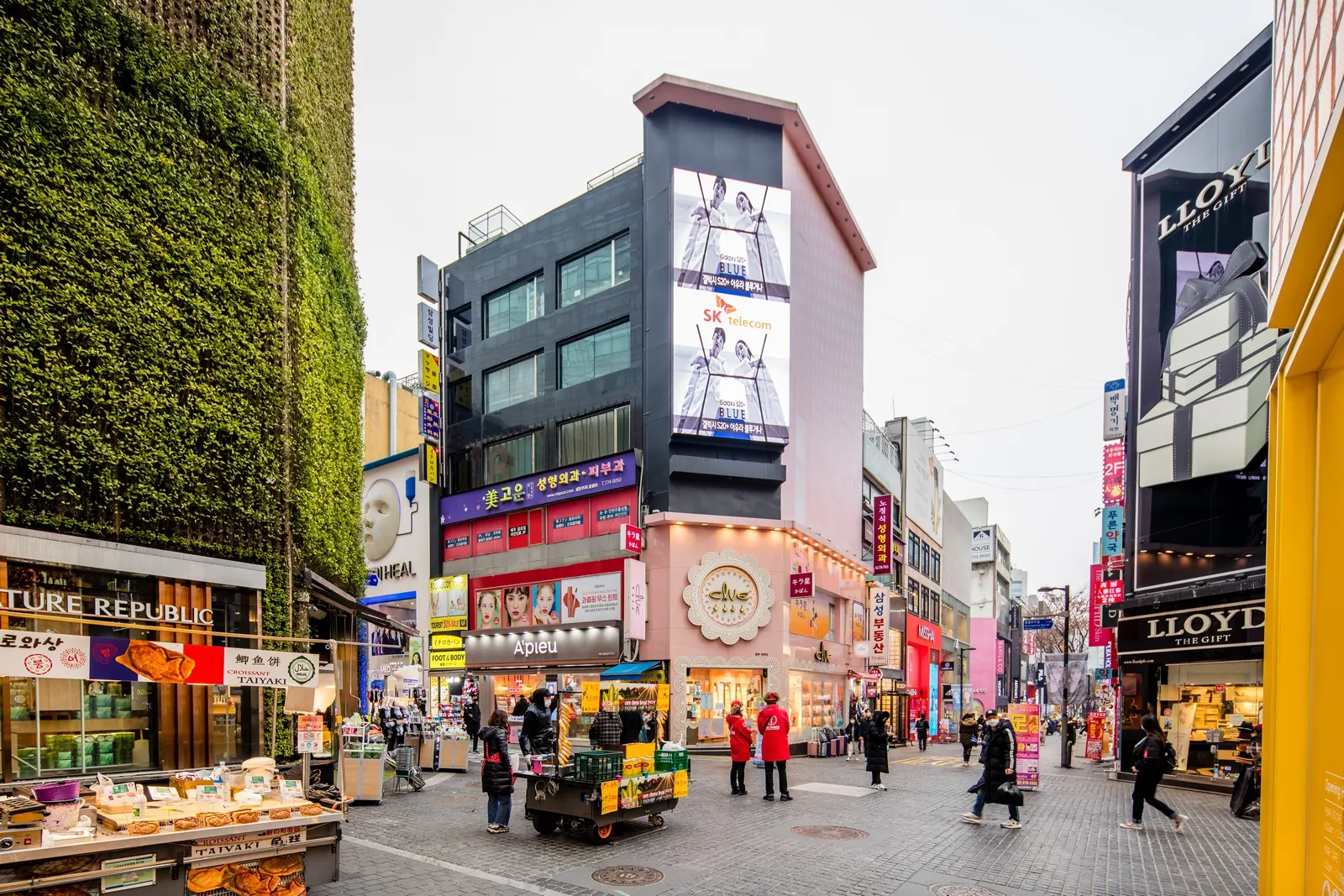
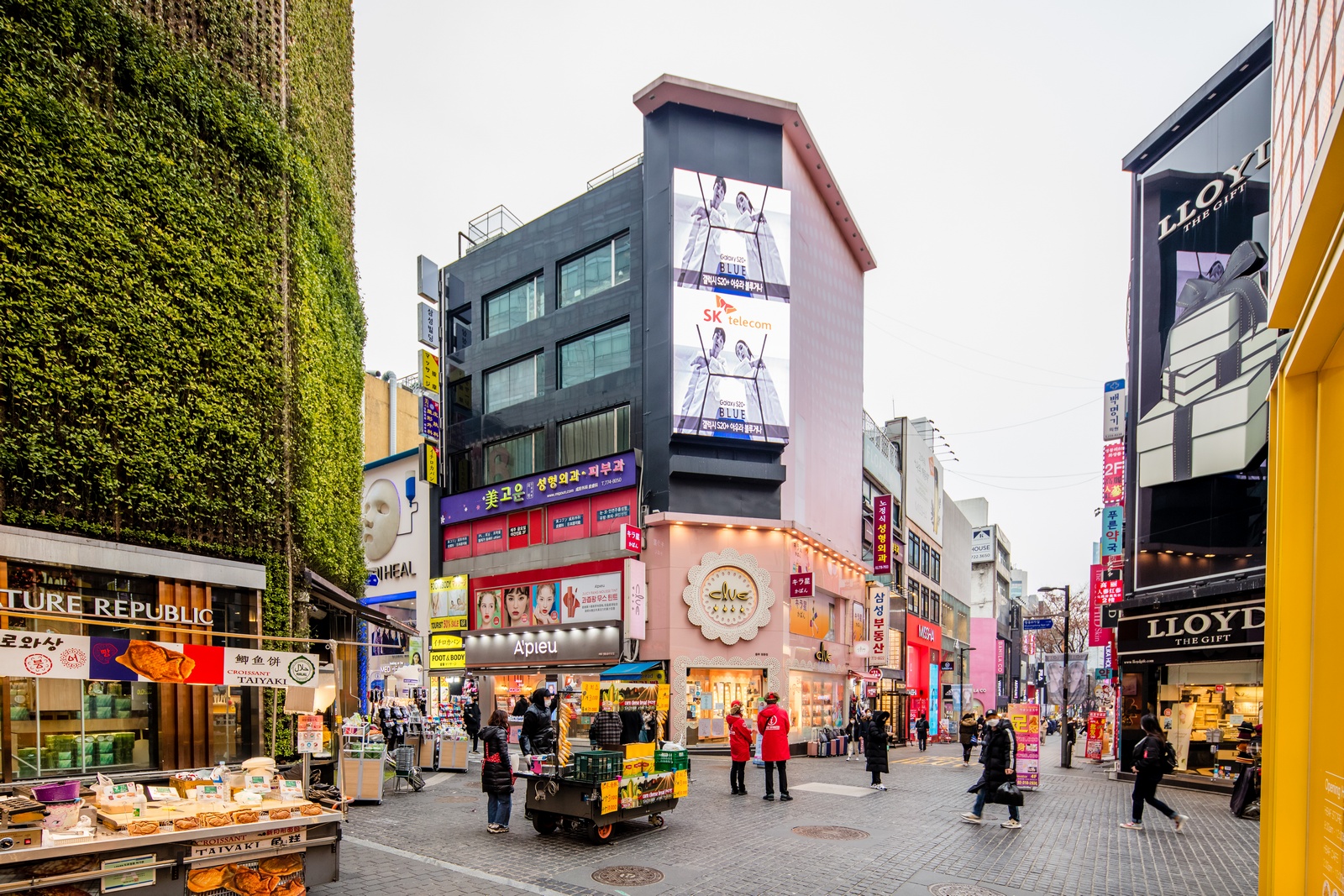
Kind Global is a Myeongdong-gil flagship in central Jung-gu, sitting on the city's principal tourist corridor at street number 26. The clinic runs a one-to-one personalised physician consultation model with private single-patient treatment rooms, and applies the same pricing for foreign and domestic patients — a same-pricing transparency posture visiting international patients should note in writing.
Forena Clinic (Hongdae) 💬
Forena is an English-speaking Gangnam regenerative practice listing five named operating doctors with a 4.9/5.0 Google rating across published reviews. The clinic operates ten-plus dedicated VIP suites and reports patients from more than fifty countries. Stem cell therapy sits alongside premium lifting devices, supported by partnerships with Merz, AbbVie, Cutera, and InMode for an integrated regenerative register.
QD Skin Clinic (Gangnam)
QD is a Gangnam aesthetic dermatology practice whose medical lead, Dr. Hong Sahyeok, holds an MD-PhD with fellowships at Harvard Medical School and Johns Hopkins Hospital. Exosome regeneration for hair loss runs alongside stem cell scalp work and skin booster protocols. Membership across seven Korean medical societies underwrites the academic register of the consultation, closer to teaching hospital than counter.
Onecell Mediclinic
Onecell is a Seoul multi-disciplinary practice maintaining an in-house stem cell research unit alongside dermatology, plastic surgery, and orthopaedic divisions. The practice lists eleven-plus named physicians; one received the 2024 Minister of Health and Welfare Commendation. Stem cell anti-ageing protocols sit within an integrated regenerative menu rather than as a standalone aesthetic add-on or a cosmetic add-on.
BLS Clinic Main Branch (Cheongdam) 💬
BLS is a Seoul lifting-and-regenerative practice with over eighteen years of clinical operation. The director has been featured on Korean broadcasters MBC and SBS and hosts the Volume Forum and Volume Master Forum, the practice's annual academic gatherings. Stem cell therapy is offered through fat grafting and hair regrowth modalities, sequenced rather than stacked in a session.
What stem cell and exosome treatment actually is
Stem cell and exosome therapies are regenerative protocols that intervene in the body's own repair pathways rather than topping up a feature — biostimulators, in the broadest sense, but operating at a cellular register the booster menu does not reach. Autologous stem cell therapy harvests mesenchymal stem cells from the patient's adipose tissue or bone marrow, isolates them under regulated laboratory conditions, and re-infuses them either intravenously for systemic regeneration or topically for surface and dermal repair. Exosome therapy, by contrast, delivers extracellular vesicles — typically harvested from mesenchymal stem cells under regulated manufacture — which carry signalling proteins, lipids, and microRNAs that prompt the recipient's own cells to upregulate repair and collagen synthesis. The clinical literature suggests outcomes correlate with cell viability at infusion, protocol design, and patient selection, more than with any specific brand or carrier system. Korea's Advanced Regenerative Medicine Center designation, administered through the Ministry of Health and Welfare, is the regulatory layer that distinguishes a permitted clinic from a marketing claim. A typical first programme runs one to three infusions or sessions over six to twelve weeks, with maintenance every twelve to eighteen months thereafter. The result is graduated, which, in this register, is the highest compliment one can pay a regenerative protocol.
How the nine Seoul clinics compare
What follows is categorical positioning — not a ranked recommendation. Re:Berry's register is regenerative-led, with stem cell and exosome protocols folded into a wider non-surgical menu, and a sequenced multi-session register tailored to returning international patients. GN Smart reads as an IV infusion specialist, with the Asan Medical Center partnership and a tightly compressed one-day model that suits short-stay visitors who need consultation, treatment, and recovery completed inside the same calendar day. a leading regional regenerative practice is the Hongdae-the regional anchorKHIDI-registered house, with regenerative boosters folded inside a broader lifting menu and four-language multilingual care across a Japan-Taiwan-Thailand caseload. Lydian is the surgically integrated regenerative practice, with stem cell fat grafting embedded in 5D liposculpting work for body contouring rather than facial protocols. Kind Global reads as a Myeongdong-corridor downtown practice with a 1:1 physician consultation model and same-pricing transparency for foreign and domestic patients. Forena is the English-speaking VIP-suite house, with ten-plus private rooms and a fifty-country patient pool surrounding its stem cell programme. QD reads as the academic-credentialled premium suite, with exosome regeneration for hair loss as the standout indication. Onecell is the multi-disciplinary research-led house, with an in-house stem cell research unit and cross-specialty consultation across dermatology, plastic surgery, and orthopaedics. BLS is the long-tenured lifting-and-regenerative practice, with eighteen-plus years and academic forum hosting. One chooses on temperament — not on tier.
How I'd choose between these nine clinics
In my reading, the choice rests less on the brochure than on three quiet variables: whether the practice holds the Korean Advanced Regenerative Medicine Center designation in its own name, whether the senior physician's credentials are verifiable through the Korean Medical Association registry rather than the clinic's own marketing, and whether the follow-up review at week four is scheduled before the patient leaves the lobby. Regenerative outcomes correlate more closely with infusion protocol design and physician seniority than with any specific brand or carrier system, which makes the named physician the variable to verify rather than assume. For international patients, multilingual aftercare — the kind handled by a coordinator who has read the case file before the patient lands — is, in my reading, the variable that separates a competent practice from a memorable one. If one's travel window is four to seven days, the houses with structured pre-arrival case review and same-day senior consultation suit best; if one is resident in Seoul, the multi-session and academically affiliated practices reward the longer commitment and the longitudinal register. The nine clinics above each meet a different brief — Hongdae versus Myeongdong versus Cheongdam — and one selects on temperament, on indication, and on whether the senior physician is willing to say, candidly, that the first session has already done the work.
How we read these clinics
This survey is editorial — not a ranked recommendation, and the reading is the reading rather than the brochure copy. We read each clinic's published materials, cross-referenced physician credentials against the Korean Medical Association registry where available, verified Advanced Regenerative Medicine Center designation through the Ministry of Health and Welfare's published register where the clinic claimed one, verified KHIDI registration through KHIDI's own roster, and assessed each practice on three dimensions: regulatory designation held in the practice's own name rather than on a partner's licence, infusion or session protocol clarity in writing rather than implied, and the quality of structured aftercare promised before the patient transfers a deposit or books the flight. We did not visit every clinic in person for this revision; some readings draw on coordinator conversations and returning-patient signal we keep returning to for honest reading across the wider city corridor. The nine entries here are clinics one might reasonably consider for a regenerative protocol in Seoul — not the only ones, and not the only defensible register one might choose. Where a commercial relationship exists with a featured house, the outbound or inline link carries rel="sponsored". We will revise this guide quarterly as practices change and as new houses earn a reading.
Frequently asked questions
What is the Advanced Regenerative Medicine Center designation?
It is a designation administered by Korea's Ministry of Health and Welfare under the Advanced Regenerative Medicine Act, granted to clinics that meet infrastructure, physician credentialling, and protocol governance standards for stem cell and exosome work. The designation is verifiable through the Ministry's published register and is held in the practice's own name rather than on a partner's licence.
How is autologous stem cell therapy different from exosome therapy?
Autologous stem cell therapy harvests mesenchymal stem cells from the patient's own adipose tissue or bone marrow, isolates them under regulated laboratory conditions, and re-infuses them. Exosome therapy delivers extracellular vesicles — small signalling carriers harvested from mesenchymal stem cells — that prompt the patient's own cells to upregulate repair pathways. The two are complementary in many protocols rather than substitutes.
How many sessions should I plan for a regenerative protocol?
One to three sessions over six to twelve weeks is typical for the first programme, with maintenance every twelve to eighteen months thereafter depending on indication and patient response. A senior physician should review at week four before committing the second session — a fixed three-session contract up front is, in our reading, a soft signal one might reconsider.
What downtime should I plan for after a stem cell or exosome session?
Most patients see mild redness and small injection marks for one to three days, with occasional bruising or fatigue after IV infusion. There are typically no incisions, no general anaesthesia, no bandages — surgical fat grafting protocols are the exception. Same-day light dining is reasonable for most patients; vigorous exercise and saunas are typically deferred for forty-eight hours.
What credentials should I check on the physician?
Korean medical licensure verifiable through the Korean Medical Association, regenerative-medicine training and years of experience demonstrable in writing, board certification in dermatology, plastic surgery, or relevant specialty, and — for non-Korean patients — a coordinator who can translate clinical nuance. Advanced Regenerative Medicine Center designation in the practice's own name is a meaningful additional signal.
How should I judge stem cell and exosome pricing in Seoul?
A single exosome session in Seoul typically ranges from KRW 400,000 to KRW 1,500,000; autologous stem cell IV infusion runs higher depending on cell processing and physician register. Materially lower prices may indicate compromised supply chain or junior operator; materially higher ones reflect senior-physician administration or premium suite operations. Transparent pricing in writing, before booking, is non-negotiable in our reading.
Can stem cell and exosome work be combined with lifting devices?
Yes, and several of the nine practices on this page do this routinely — Ultherapy Prime, Sofwave, Thermage FLX, or Onda paired with exosome microneedling is a common combination, typically sequenced across separate visits rather than stacked in one session. The lifting device is usually administered before the regenerative carrier to optimise the dermal scaffold; the senior physician should plan the order.
What are the realistic risks of stem cell and exosome therapy?
Mild bruising, transient redness or swelling, occasional fatigue after IV infusion, and rarely infection if aftercare is poor or if product provenance is compromised. Serious adverse events are uncommon when the protocol is physician-administered and the product is sourced through regulated manufacturers with visible batch lot numbers. A practice that discusses risk candidly before the session is one to trust.
Who should not book a stem cell or exosome protocol?
Patients with active malignancy, unstable autoimmune conditions, active infection, recent oral isotretinoin within six months, pregnancy or lactation, or known hypersensitivity to a relevant carrier should not proceed. A senior physician declining a modality on indication grounds is, in our reading, a signal of practice quality rather than a hindrance to the trip — and worth the consultation fee on its own.
What visa or travel logistics should I plan for a Seoul trip?
Most visitors from the United States, Hong Kong, Singapore, Japan, and the European Union enter Korea on the standard ninety-day visa-waiver framework — no medical visa is required for the protocols described on this page. A flight that allows three to seven days in Seoul is the comfortable register; the Korea Health Industry Development Institute (khidi.or.kr) publishes the medical-tourism framework worth reading before the trip.
How do I verify product authenticity for an exosome session?
The vial should carry a Korean Ministry of Food and Drug Safety lot number, and a senior practice will, on request, photograph the vial and the lot in front of the patient before reconstitution. A clinic that hesitates is one to leave. The published literature on exosome outcomes assumes regulated product — counterfeit suspensions or grey-market carriers are categorically a different conversation and a different risk register.