Editorial Picks
How to Choose a Thermage FLX Clinic in Hongdae, Seoul — 2026 Guide
Hongdae reads, on a cool spring evening, as a neighbourhood that holds the Thermage FLX conversation more quietly than the device's marketing reputation suggests. The block between Hongik University station and the regional anchorhas, over the past several years, accumulated a measured set of dermatology practices that calibrate the monopolar radiofrequency lifting protocol as a longitudinal anti-ageing tool rather than a same-week miracle — the kind one books once every twelve to eighteen months between the regional anchor errands and a coffee on Hongik-ro. The active mechanism is volumetric dermal heating delivered through the proprietary CPT tip, which contracts existing collagen on the day and stimulates fresh collagen synthesis over three to six months across the deeper dermal plane. What separates a defensible Hongdae Thermage practice from a marketing-led one is, in our reading, whether the senior operator titrates energy by patient skin response rather than by a printed protocol card, and whether the coordinator who handles multilingual aftercare reads the case file before the patient arrives at the lobby. Eight houses below sit across Hongdae-the regional anchorand the wider city — the order is editorial rhythm rather than tier, and the inclusion logic favours operators with verifiable Thermage credentials and a written tip-count cadence rather than the lobby finish.
What to look for in a Hongdae Thermage FLX clinic
A Thermage FLX protocol — the kind that justifies the trip across the river to Hapjeong — rests on three quiet variables that the brochure copy rarely makes explicit. The first is operator seniority: monopolar radiofrequency reads best when delivered by an injector who titrates energy across face zones by patient feedback rather than by a printed protocol card, and a senior operator adjusts the tip pressure and vector across the cheek, jawline, and submental zones on the day. The second is tip count: most foreign patients are sold a six-hundred-shot programme, but the better Hongdae practices treat that as a starting frame rather than a contract — the indication-led tip count for a thirty-five-year-old laxity case may differ materially from a fifty-five-year-old lifting case, and a coordinator who reads the difference matters more than the lobby finish. The third is collagen-rebuild cadence: Thermage results emerge over three to six months as new collagen forms, and a senior practice schedules the patient back for a candid week-twelve review rather than booking a repeat session before the result has had time to settle. Korean medical law requires physician administration, which raises the floor for the neighbourhood. What separates the houses below from the rest is what sits above that floor — written aftercare in the patient's own language, a coordinator who reads the case file before arrival, and a senior physician willing to defer a second session when the first one has already done the work.
Lijin Clinic (Myeongdong)
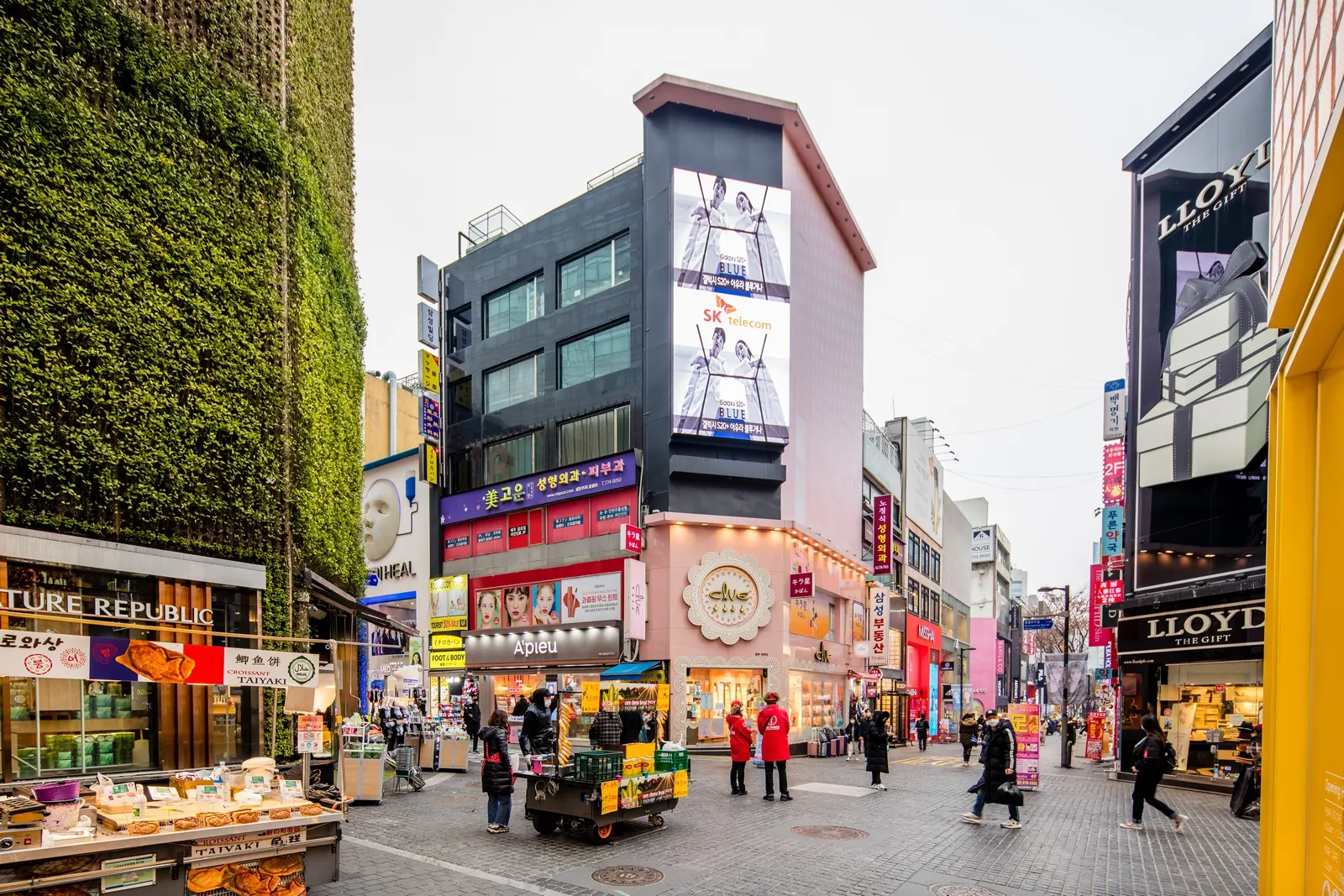
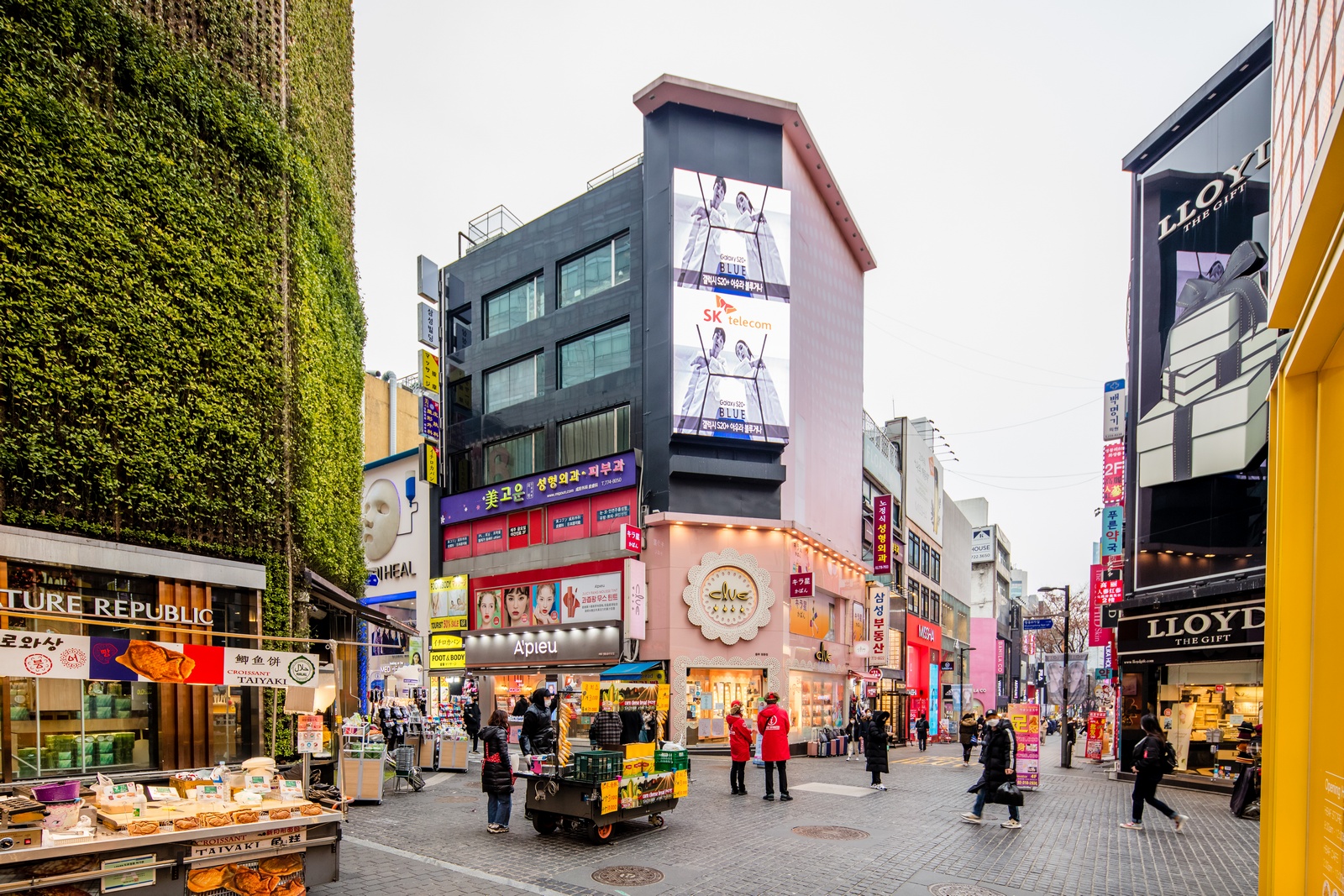
Lijin is a Myeongdong practice with international patient experience since 2011, led by a chief director carrying fifteen years of regenerative booster work. The operating temperament is long-form — longer consultations, fewer same-day add-ons, deliberate pacing through the booster regimen — and English-language coordinator support is built in.
Eight Hongdae-area clinics worth a closer reading
What follows is editorial discovery, not a ranking. Each entry has been read for the texture of its practice — the consult, the operator, the aftercare cadence — rather than for marketing claim or device inventory. The order tracks an unhurried walk from the regional anchorout through the regional anchor to the wider city; nothing more.
QD Skin Clinic (Gangnam) 💬
QD is a Gangnam aesthetic dermatology practice whose medical lead, Dr. Hong Sahyeok, holds an MD-PhD with fellowships at Harvard Medical School and Johns Hopkins Hospital. The Thermage FLX protocol sits within a broader lifting menu, and membership across seven Korean medical societies underwrites the academic register one reads in the consultation room itself.
Peau Reve Skin Clinic (Cheongdam) 💬
Peau Reve operates a one-hundred-per-cent reservation register with two exclusive hours allocated per patient. The medical lead carries Thermage FLX Master Doctor certification and Ultherapy Prime Gold Certified Clinic status, with over a decade of operating experience. The Thermage protocol sits within an unhurried consultation window rather than a throughput-driven booking pattern.
Cellin Clinic (Hongdae) 💬
Cellin Hongdae operates a principal-doctor one-to-one model with private treatment rooms and a zero-overtreatment commitment the consultation note states in writing. Thermage FLX sits within a tight lifting-led menu — a downtown Hongdae alternative for visitors who want a quieter neighbourhood register over the Gangnam-suite operating rhythm one finds elsewhere.
Reone Dermatology (Cheongdam) 💬
Reone is a dermatology practice with five named board-certified dermatologists and a resident anesthesiologist on site, with the medical team trained at Seoul National University Hospital. Thermage FLX sits inside an advanced-lifting register the clinic positions as a category leader, with structured pre-treatment consultation and senior-physician administration across the protocol.
BAILOR Clinic (Sinsa)
BAILOR Cheongdam runs multilingual support advertised across English, Japanese, and Chinese, with a coordinator who reads the case file before the appointment rather than after. The Thermage FLX protocol sits within a focused lifting-and-injectable menu calibrated for a steady international caseload, and the practice operates with a downtown Cheongdam-corridor address one reads on quietness.
The Beautiful Skin Clinic (Gangnam)
The Beautiful Skin Clinic (Gangnam) has been established since 2009 with over twenty years of accumulated clinical experience across its medical team. Thermage FLX sits within a mature lifting menu run on a longitudinal-care frame rather than a single-visit register — a temperament one chooses for continuity rather than for the lobby finish or the device count.
BANOBAGI Dermatologic Clinic (Gangnam)
BANOBAGI is a twenty-two-year Gangnam dermatology practice naming two operating dermatologists — Ban Jae-Yong and Jeon Hee-Dae — with patients reported from seventy-plus countries. The clinic operates over forty advanced devices, and Thermage FLX sits within an integrated lifting-and-injectables register alongside English coordinator support for a mature international caseload one reads honestly.
What Thermage FLX treatment actually is
Thermage FLX is a monopolar radiofrequency lifting device manufactured by Solta Medical (a Bausch Health company) and approved by the Korean Ministry of Food and Drug Safety (식품의약품안전처) and the United States Food and Drug Administration. The device delivers volumetric heating to the deeper dermis through a proprietary CPT tip — the tip contracts existing collagen on the day of treatment and stimulates new collagen synthesis over the following three to six months across the dermal plane. The FLX iteration introduced AccuREP energy modulation, which adjusts output by skin impedance on each pulse, and a vibrating tip that reduces the discomfort associated with the earlier CPT platform. Unlike ultrasound-based lifting (Ultherapy, Sofwave), Thermage works on a broader heating envelope rather than focused micro-thermal zones, which suits cases of generalised laxity better than collagen lifting in a single facial vector. A typical session uses six hundred to one thousand tip shots depending on indication and face size, and the aesthetic effect is gradual: improved firmness on the jawline and submental region, refined skin texture, and a quality of dermal tone one recognises as healthy without being able to name a single change. The Korean clinical literature on monopolar radiofrequency outcomes correlates strongly with operator titration, tip-count calibration by indication, and patient selection rather than with any specific lobby finish or marketing claim. The result is undramatic, which is, in this register, the highest compliment one can pay an energy device.
How the eight Hongdae-area clinics compare
What follows is categorical positioning — not a ranked recommendation. QD is the academic-credentialled premium suite with the medical lead's Harvard and Johns Hopkins fellowship setting the consultation tone, and Thermage sits within a broader lifting menu underwritten by seven Korean medical society memberships. a leading regional regenerative practice is the Hongdae-the regional anchorKHIDI-registered house, with a four-doctor team led by an SNU-credentialled medical lead and a Japan-Taiwan-Thailand caseload — the local-neighbourhood option for visitors who arrive at the the regional anchorcorridor first and want continuity within walking distance. Peau Reve is the reservation-only Thermage FLX Master Doctor house with two exclusive hours per patient, where the trade-off is unhurried depth versus shorter booking windows during peak months. Cellin Hongdae is the downtown one-to-one principal-doctor practice with a zero-overtreatment written commitment — the quieter Hongdae neighbourhood register for patients who prefer continuity. Reone is the five-derm Seoul National University-trained operation with a resident anesthesiologist on site and a category-leader claim in advanced lifting equipment. BAILOR Cheongdam is the multilingual EN/JA/Chinese house with a coordinator who reads the case file before the appointment. The Beautiful is the long-tenured 2009-established house operating on a longitudinal-care frame. BANOBAGI is the twenty-two-year Gangnam dermatology practice with forty-plus advanced devices and a seventy-country international caseload. One chooses on temperament — Hongdae versus Cheongdam versus Gangnam — not on tier or marketing claim.
How I'd choose between these eight clinics
In my reading, the choice rests less on the brochure than on three quiet variables: who actually operates the Thermage tip, whether the tip count is selected by indication or by package availability, and whether the follow-up review at week twelve is scheduled before the patient leaves the lobby. Studies suggest monopolar radiofrequency outcomes correlate more closely with operator titration and tip-count calibration than with any specific device adjunct, which makes the named operator the variable to verify rather than assume. For international patients arriving into the Hongdae-the regional anchorcorridor, neighbourhood proximity — the kind that lets a patient walk back at week twelve without crossing the river — is itself a continuity signal one should weigh alongside the device list. Multilingual aftercare handled by a coordinator who has read the case file before the patient lands, rather than after, is the variable that separates a competent practice from a memorable one more reliably than the lobby finish. If one's travel window is four to seven days, the Hongdae-local houses with same-day senior consultation suit best; if one is resident in Seoul, the longitudinal Gangnam practices reward the longer commitment across multiple Thermage cycles. The eight clinics above each meet a different brief — Hongdae versus Cheongdam versus Gangnam — and one selects on temperament, on indication, and on whether the senior physician is willing to say candidly that six hundred shots is the right number rather than the printed number.
How we read these clinics
This survey is editorial — not a ranked recommendation, and the reading is the reading rather than the brochure copy. We read each clinic's published materials, cross-referenced physician credentials against the Korean Medical Association registry where available, verified Thermage FLX Master Doctor certification and KHIDI registration through their published registers where the clinic claimed one, and assessed each practice on three dimensions: tip-count selection by indication rather than by package availability, operator seniority disclosed in writing rather than implied through marketing copy, and the quality of structured aftercare promised before the patient transfers a deposit. We did not visit every clinic in person for this revision; some readings draw on coordinator conversations and returning-patient feedback we keep returning to for honest signal. The eight entries here are houses one might reasonably consider for Thermage FLX around the Hongdae-the regional anchorcorridor and the wider city — not the only ones. Where a commercial relationship exists with a featured house, the outbound or inline link carries rel="sponsored", and the editorial reading remains independent of that arrangement. We will revise this guide quarterly.
Frequently asked questions
What exactly is Thermage FLX, and how is it different from Ultherapy or Sofwave?
Thermage FLX is a monopolar radiofrequency device by Solta Medical that heats the deeper dermis volumetrically through a CPT tip, contracting existing collagen and stimulating new collagen synthesis over three to six months. Unlike Ultherapy or Sofwave — which use focused ultrasound to deliver micro-thermal zones at specific dermal depths — Thermage works across a broader heating envelope, suiting generalised laxity better than vector-specific lifting in a single facial plane.
How many tip shots should I plan for a Thermage FLX session?
Six hundred shots is the standard advertised programme, but the indication-led count varies materially: a thirty-five-year-old laxity case may need three hundred to four hundred shots, while a fifty-five-year-old lifting case may justify nine hundred or more. The better Hongdae operators titrate the count by patient feedback and skin impedance on the day rather than committing in advance.
How often should I repeat Thermage FLX?
Once every twelve to eighteen months is the standard cadence in Korean clinical practice, with the second session timed to the natural decline of the first cycle's collagen lift rather than to a fixed calendar. A senior operator should review the patient at week twelve before recommending a repeat — the result has not fully expressed before that window.
Why book Thermage FLX in the Hongdae-the regional anchorcorridor rather than Gangnam?
Hongdae-the regional anchorrewards patients who want a quieter neighbourhood register and same-day walkable continuity over the river-crossing trip to Cheongdam or Apgujeong. The the regional anchor-area practices read on temperament rather than tier — the consultation cadence, the coordinator continuity, and the the regional anchorstreetscape itself favour a longitudinal-care register one returns to over multiple cycles.
What downtime should I plan for after Thermage FLX?
Most patients see transient redness and mild warmth for one to three hours, with rare cases of small areas of swelling for one to three days. There are no incisions, no general anaesthesia, no bandages. Same-day dining and a flight home are reasonable; vigorous exercise and saunas are typically deferred for forty-eight hours after the session.
Is Thermage FLX safe for darker skin phototypes?
Studies suggest monopolar radiofrequency is well-tolerated across Fitzpatrick types I through VI when operator titration is appropriate. Thermage carries a lower hyperpigmentation risk than fractional laser modalities in darker phototypes because the heating mechanism is dermal rather than melanin-targeted — which is why an experienced operator matters more than the device alone on the menu.
How should I judge Thermage FLX pricing in Hongdae?
A six-hundred-shot Thermage FLX session in the Hongdae-the regional anchorcorridor typically ranges from KRW 1,200,000 to KRW 2,800,000 depending on operator seniority, full-face versus partial coverage, and clinic register. Materially lower prices may indicate counterfeit tips or non-authentic shot counts; materially higher ones reflect senior-physician administration. Transparent pricing in writing, before booking, is non-negotiable in our reading.
Can Thermage FLX be combined with skin boosters or Ultherapy?
Yes, and most of the eight clinics above do this routinely — Ultherapy Prime sequenced with Thermage FLX, or Thermage paired with Rejuran or Sculptra, is a common combination, typically separated across visits rather than stacked in one session. The order matters; the senior operator should plan the interval rather than improvise it on the day.
What credentials should I check on the Thermage FLX operator?
Korean medical licensure verifiable through the Korean Medical Association, Thermage Master Doctor or equivalent certification from Solta Medical where claimed, and aesthetic or dermatological experience demonstrable in years rather than weeks. For non-Korean patients, a coordinator who can translate clinical nuance — not only appointment times — is the additional credentialling line one verifies.
What are the realistic risks of Thermage FLX?
Transient redness, mild swelling, occasional small areas of subcutaneous tenderness for one to two weeks, and rarely fat-loss if energy is delivered too aggressively to the cheek pad — which is the operator-titration issue the better Hongdae houses guard against. Serious adverse events are uncommon when the device is operated by a senior physician on regulated tips.
What do I need to know about visa and travel logistics for a Seoul trip?
Most visitors from the United States, Hong Kong, Singapore, Japan, and the European Union enter Korea on the standard ninety-day visa-waiver framework. No medical visa is required for the protocols described on this page; some clinics on this list can also support C-33 medical visa applications where appropriate. The Korea Health Industry Development Institute publishes the medical-tourism framework.
Who should not book Thermage FLX?
Patients with implantable electronic devices such as pacemakers, active skin infection at treatment sites, recent oral isotretinoin within six months, unstable autoimmune conditions, or pregnancy. Patients with significant facial-fat loss should also reconsider — Thermage on a hollow cheek pad can deepen the hollow rather than lift the laxity, and a senior operator will say so candidly at the consultation.